



02 Sep “THE RAMA REGULATION” OF THE GJKKO: AN ATTACK ON MEDIA FREEDOM AND JUDICIAL INDEPENDENCE
BY ILIR META
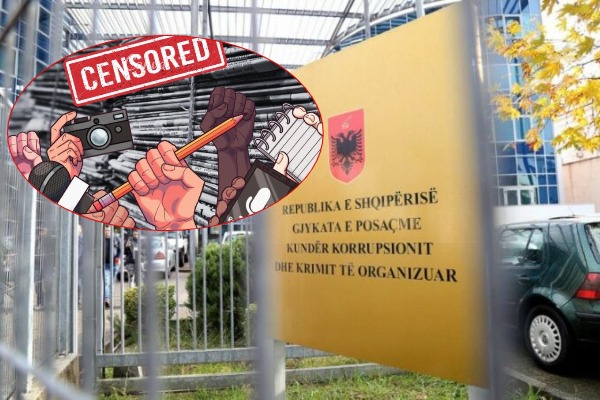
When a court restricts the media, it does not restrict journalism alone. It restricts the public’s right to see, hear, and scrutinize justice.
Media freedom is not a privilege that courts or state institutions may grant, restrict, or withdraw at their discretion.
Media freedom is guaranteed by the Constitution and the European Convention on Human Rights.
It is one of the fundamental pillars of a democratic society and a direct safeguard for transparency, accountability, and public oversight of the exercise of power.
In a state governed by the rule of law, justice must not only be independent and impartial; it must also be visible to the public as such.
And this is precisely where the media’s decisive importance lies.
The media is the bridge through which a public judicial proceeding becomes genuinely accessible to society.
For this reason, any regulation that unjustifiably, unreasonably, or arbitrarily restricts, inside the courtroom, and without prior consultation with the media, the presence, reporting, or recording of judicial proceedings is not merely an administrative matter.
It directly affects media freedom, the public’s right to information, the principle of open justice, and, ultimately, citizens’ trust in the justice system.
It is in this context that the so-called “Rama Regulation” of the GJKKO, dated July 17, 2026, which entered into force today (September 1, 2026), must also be viewed.
1. A Regulation That Goes Beyond Its Purpose
The inclusion of detailed rules governing Media–Judiciary relations in this Regulation raises a fundamental initial concern.
This relationship has already been specifically regulated by the Standard Guidelines on the Relationship Between Courts, the Public and the Media, adopted by the High Judicial Council (KLGJ) and published in the Official Gazette No. 182 on December 16, 2023.
Article 14, paragraph 8, letter b) of these Guidelines provides that hearings may not be public: “when one of the parties to the proceedings does not wish the hearing to be recorded. This rule does not apply to the prosecutor and the defense lawyer.”
In other words, this may be requested by the defendant himself, but not when the presiding judge simply considers it appropriate.
Consequently, an internal act of the GJKKO cannot serve as an instrument for creating a parallel regime that is more restrictive and potentially contradictory to the Constitution, the law, and normative acts adopted by the competent authorities.
The “Rama Regulation” thus creates a problematic precedent concerning the hierarchy of legal norms, the principle of statutory reservation, and the rule of law.
2. The Privatization of the Courtroom and the Restriction of Public Oversight
One of the most serious concerns raised by the “Rama Regulation” is the creation of conditions for the de facto “privatization” of the courtroom by restricting the media’s presence and ability to follow and report on criminal proceedings.
A courtroom cannot be transformed into a closed space where the public is allowed to see only what the court administration decides to make available.
Particularly in proceedings involving significant public, political, or institutional interest, the media is the primary mechanism through which the public exercises its right to monitor the administration of justice.
If the public cannot be physically present, the media is the means through which the principle of open justice is extended and made effective, efficient, and practical.
3. The Media Is Not the Enemy of Justice
One of the most troubling premises conveyed by the spirit of this Regulation is the treatment of the media as a factor that must be controlled, restricted, and managed, rather than as a natural ally of the public interest.
This view is anachronistic and contrary to the spirit of the Constitution and the European Convention on Human Rights.
In a functioning democracy, the judiciary and the media should not be viewed as adversaries. On the contrary, both share a common interest: protecting the public against abuses of power, corruption, and criminality.
An independent media is not a threat to an independent court.
A threat to an independent court is a lack of transparency.
A court that has confidence in its own accountability, independence, and impartiality should not fear the public eye or media reporting.
4. The Public Is a Stakeholder in Criminal Justice
In cases involving the investigation and trial of senior officials, public officeholders, or elected representatives, the public interest is not abstract.
When a criminal offense is alleged to have been committed in connection with the exercise of public power, the public is directly the bearer of the public interest that must be protected.
Therefore, restricting the media inside the courtroom affects not only journalists, but also society’s right to follow the proceedings and form its own judgment about how justice is being administered.
A criminal proceeding of significant public interest cannot be reduced to institutionally controlled communication.
5. “Controlled Transparency” Is Censorship
The concept of “controlled transparency,” used in this Regulation, is fundamentally problematic.
In a democratic society, there cannot be privileged media outlets and discriminated-against media outlets when it comes to access to judicial information.
All media outlets should have equal opportunities to inform the public, in accordance with reasonable rules governing order and decorum in the courtroom.
Otherwise, so-called “transparency” risks becoming censorship — an instrument for selecting the information that the public is permitted to receive.
And transparency controlled by those in power is not transparency; it is information management.
This is particularly concerning in a country where the latest ODIHR mission report on the May 11, 2025 elections emphasized that the overwhelming majority of media outlets are connected to, or controlled by, the Government.
6. Restricting the Media’s Presence
The provision under which the media may have access only to seats left vacant after accommodating family members and other parties is particularly problematic.
The media cannot be treated as a secondary presence in proceedings that are legally public.
On the contrary, seats should be guaranteed for media representatives precisely because of their public function.
A court that restricts the media on the basis of the courtroom’s physical capacity must have transparent and objective mechanisms in place, rather than criteria that place journalists at the bottom of the hierarchy of access.
7. Audio and Audiovisual Recording and Broadcasting
The rules governing audio and audiovisual recording must also be assessed against the standards already established by the KLGJ.
The Standard Guidelines on the Relationship Between Courts, the Public and the Media provide for the possibility of audio recordings using equipment employed by journalists, including mobile phones, provided that order and decorum in the courtroom are maintained and legal requirements are respected.
An internal regulation of the GJKKO cannot replace this standard with a more restrictive regime.
A court cannot create, through an internal regulation, restrictions that the law has not established, nor can it exceed the restrictions provided for by law.
8. Registers for Journalists: Administration or Intimidation?
Maintaining special registers for the media and journalists’ activities, particularly in electronic form, is another element of this Regulation that requires serious reconsideration.
Entry logs maintained by security personnel are sufficient to ensure order and security within the institution.
Creating additional mechanisms for the administrative tracking of journalists’ activities risks producing a chilling effect and negatively affecting the free exercise of the journalistic profession.
A free media cannot operate under a climate of administrative surveillance.
9. The GJKKO Administration Cannot Assume the Powers of the Constitutional Court
Through its provisions, the Regulation risks entering a field that does not belong to the court administration.
Matters concerning restrictions on constitutional rights, including media freedom, cannot be resolved through administrative discretion.
The GJKKO administration cannot assume the powers of the legislature, nor those of the Constitutional Court.
Any restriction of a fundamental right must have a clear legal basis, be proportionate, and comply with the Constitution and the standards of the European Convention on Human Rights.
10. Article 98 and the Problem of Sanctions
Article 98 of the “Rama Regulation” raises particular concerns because of the nature of the sanctions it provides for.
An internal administrative act cannot assume the characteristics of a Criminal or Administrative Code and autonomously create restrictions and sanctions against persons exercising rights guaranteed by law.
This raises a direct issue concerning the principle of statutory reservation and the separation of powers.
The GJKKO is part of the judiciary. It is not Parliament.
And a court cannot assume the function of the legislature.
11. A Full 162 Articles for a Regulation: Overregulation and Overreach
The very normative technique of this Regulation raises questions.
With a full 162 articles, it resembles a Code more than an internal administrative regulation.
The problem is not merely its length, but the degree of overregulation and overlap with the Constitution, legislation, the Code of Criminal Procedure, and the acts of the KLGJ.
A regulation should clarify and facilitate institutional functioning, not create a parallel universe of rules.
12. A Regulation That Ultimately Weakens the GJKKO Itself
Ironically, a Regulation intended to better administer the activities of the GJKKO may produce the opposite effect.
By weakening the media’s presence, it also weakens one of the most important mechanisms of public oversight.
By restricting transparency, it fuels suspicion.
By limiting independent reporting, it creates space for speculation.
And by portraying the media as a problem, it undermines the court’s own credibility.
An independent court needs an independent media.
Not controlled media.
Not selected media.
Not media that may enter the courtroom only with administrative permission.
But media that is free to see, hear, report, and criticize.
13. The KLGJ Must Protect the Standard, Not Relativize It
The High Judicial Council must serve as the guarantor of a healthy and institutional relationship between the judiciary and the media.
Rather than allowing rules and restrictions to accumulate, the KLGJ should intervene to ensure full compliance with the Constitution, the law, and the 2023 Standard Guidelines.
The judiciary has an interest in a strong and independent media because the media is one of society’s most important safeguards against abuses of power.
But the media must also understand that its independence is directly linked to the independence of the judiciary.
Without independent courts, there is no genuine media freedom. Without a free media, there is no genuine oversight of justice.
Therefore, all provisions restricting the media in the GJKKO’s “Rama Regulation,” dated July 17, 2026, must be repealed, and the standards established by the Standard Guidelines on the Relationship Between Courts, the Public and the Media, adopted by the KLGJ and published in the Official Gazette in 2023, must be restored.
Because the issue is not simply where a journalist sits in the courtroom.
The issue is whether citizens have the right to see justice being administered.
The issue is not simply whether a journalist may record a hearing.
The issue is whether justice is willing to remain under public scrutiny.
And above all, the issue is not merely media freedom.
It is the independence of the judiciary itself.
Because a truly independent court has no need to shut itself off from the media. It needs to remain open to it, precisely to demonstrate every day that it is impartial, equally distant from all parties, and confident that its decisions can withstand public scrutiny.
Justice cannot demand trust by closing its doors.
It cannot demand independence by restricting transparency.
And it cannot build authority by treating the media as an adversary.
If investigations that were supposed to remain secret are made public, while trials that are supposed to be public are transformed into proceedings governed by “controlled transparency,” then we have turned the very logic of justice upside down.
In a democracy, justice must be independent from political power, but never independent from public scrutiny and judgment.
Therefore, any attempt to turn the courtroom into a closed space, the media into a controlled entity, and transparency into a privilege administered by the court does not protect the GJKKO. On the contrary, it weakens it.
And a GJKKO that weakens independent media instead of protecting it does not strengthen justice; it strengthens the perception of “Justice by Direction.”
Because genuine justice has nothing to fear from cameras, journalists, criticism, and, above all, the eyes of citizens.
True justice has only one fear: that it may not actually be independent.
Therefore, among other things, this is also an anti-GJKKO regulation, serving only Edi Rama, the power broker and director of the soap opera called “Justice by Direction.”
In other words, investigations that were supposed to remain secret were made public.
While trials that are supposed to be public are being made secret whenever the defendant himself requests it.